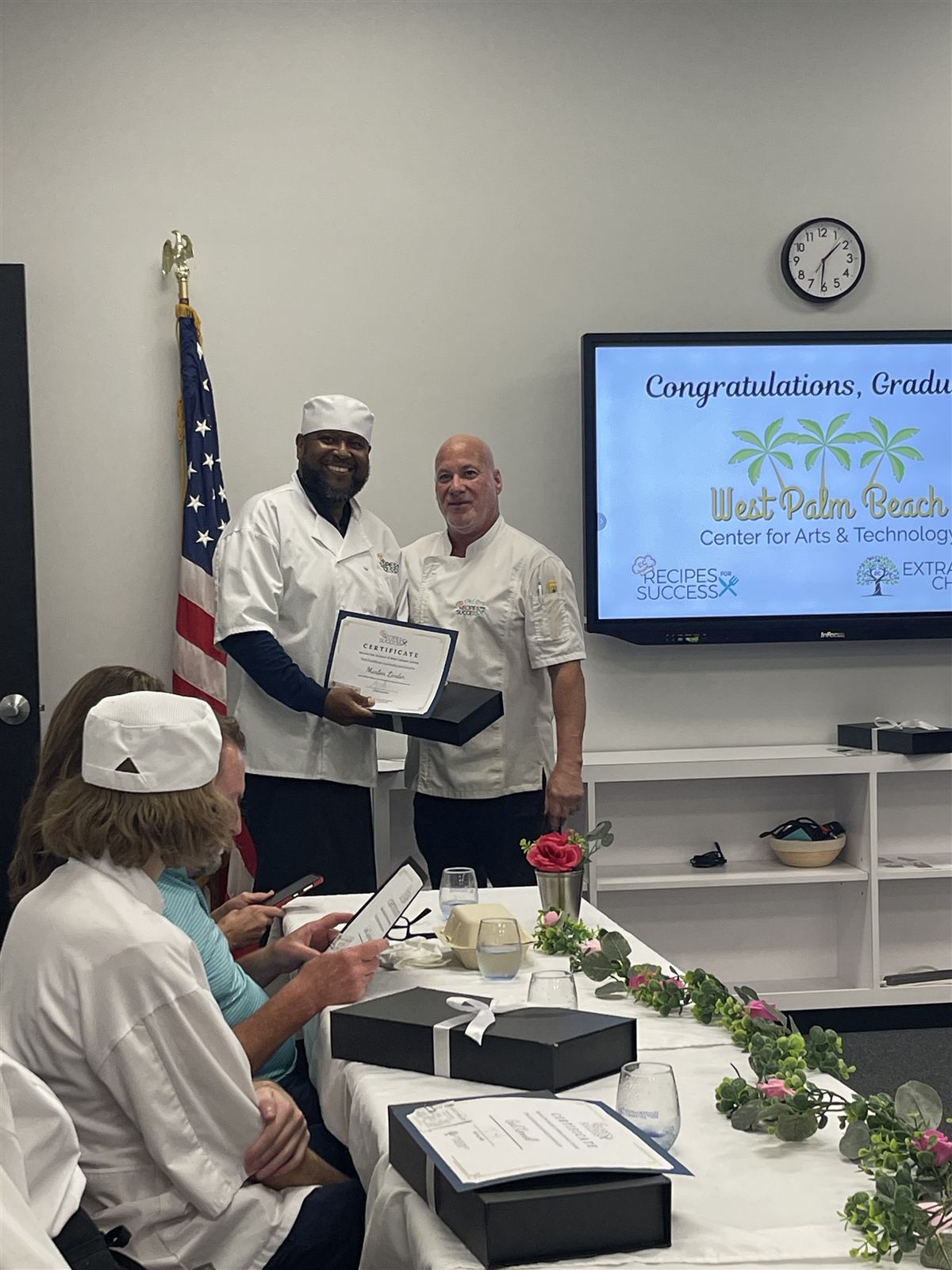
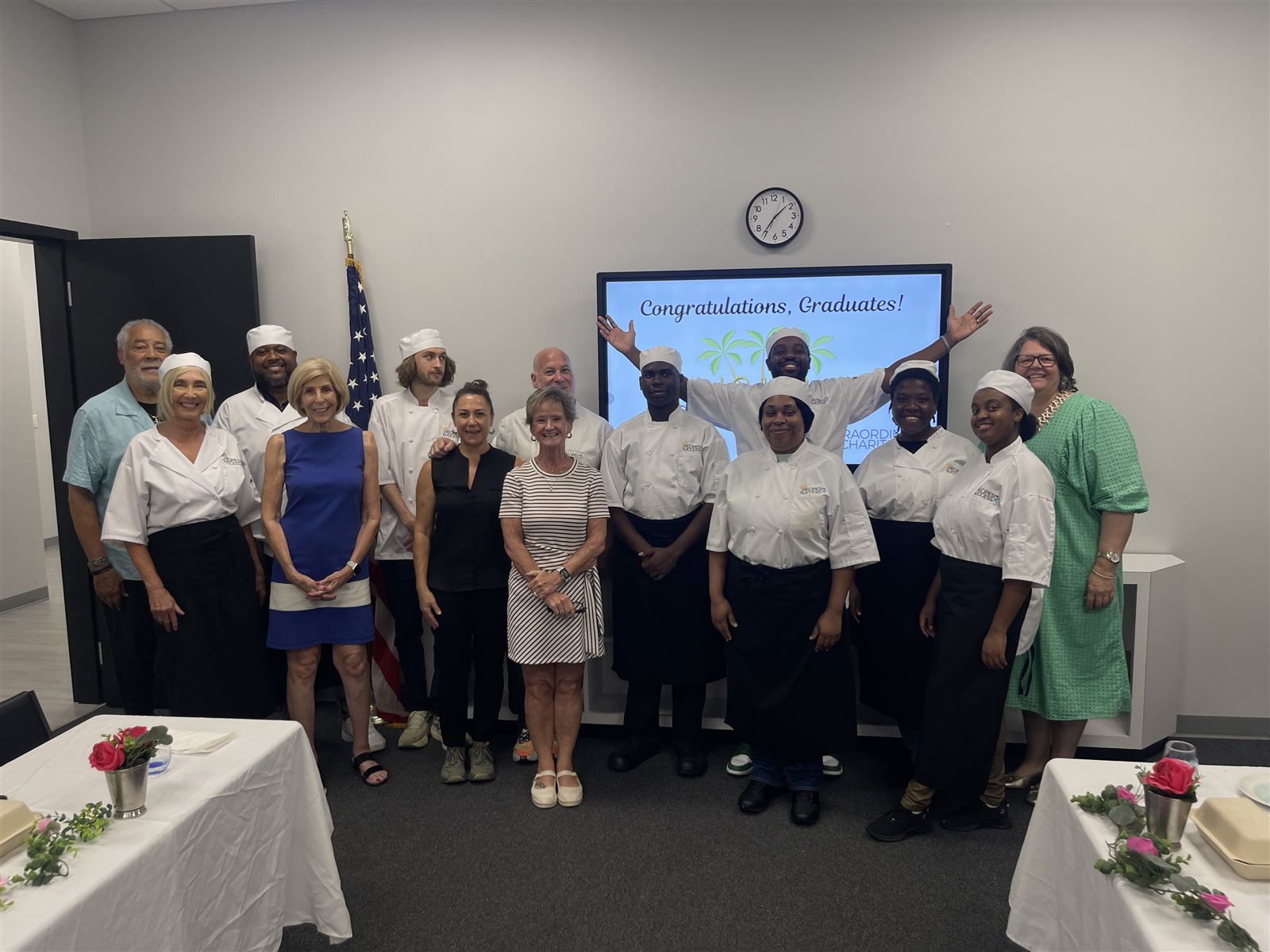
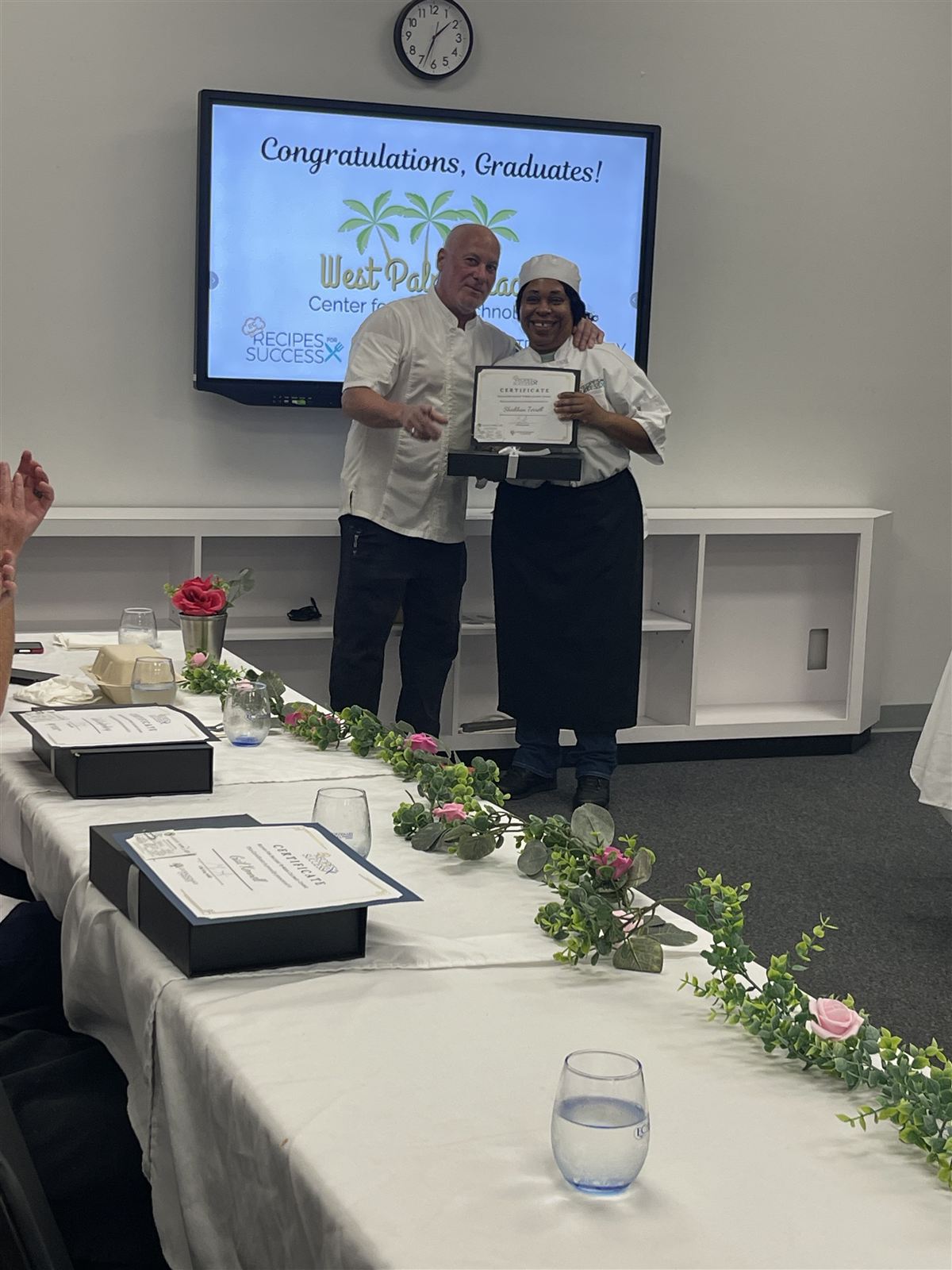
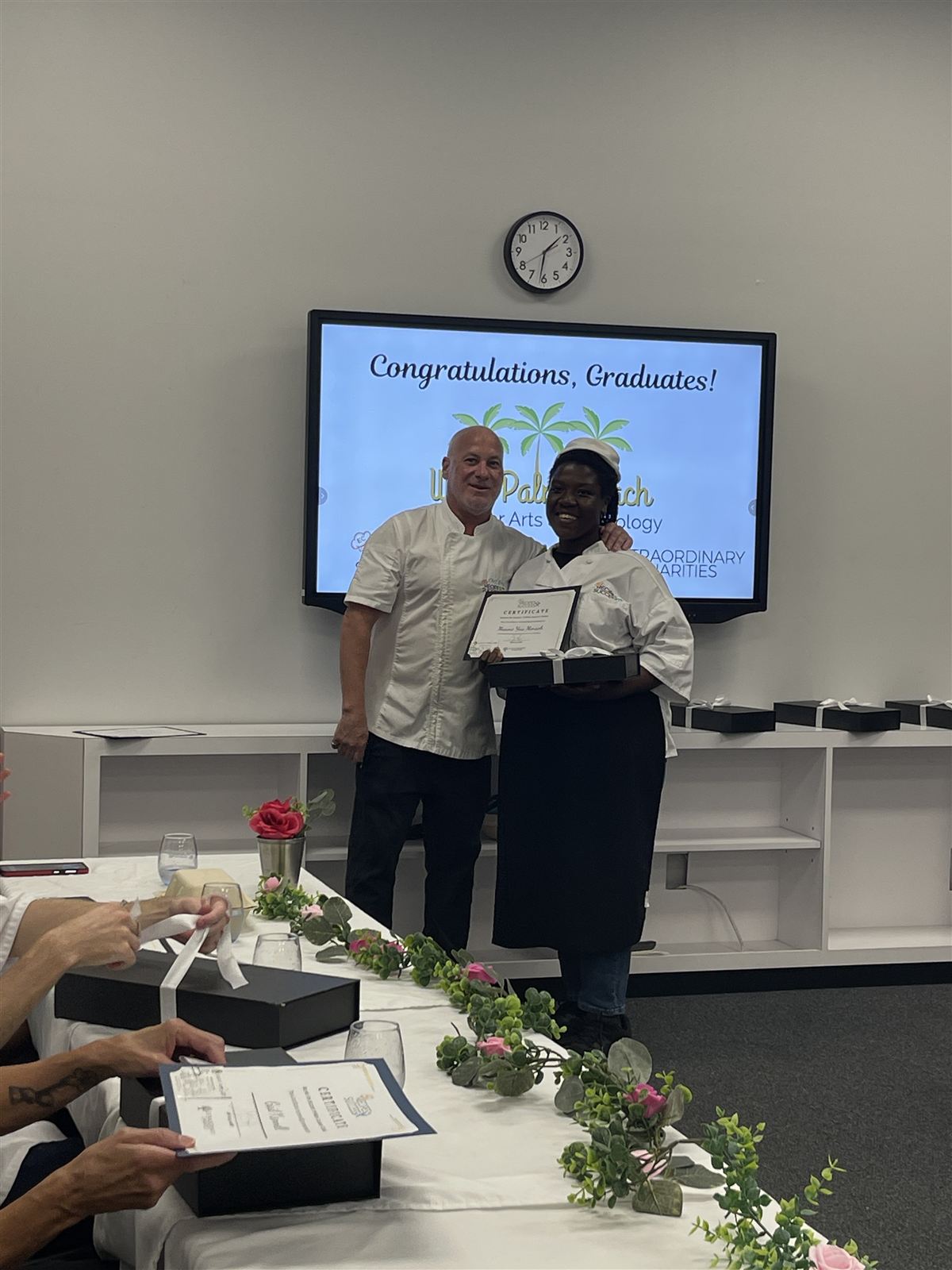
On July 30, 2026, eight students completed the Culinary Workforce Development program at the West Palm Beach Center for Arts & Technology (WPBCAT), delivered in partnership with Extraordinary Charities through its Recipes for Success initiative. The hands-on program trains participants in professional kitchen skills, food safety, and job readiness, then connects graduates directly to employers across West Palm Beach and Palm Beach County. For eight students, graduation day marked the end of early mornings in the kitchen and the beginning of new careers.
Eight Graduates Celebrate a Major Milestone
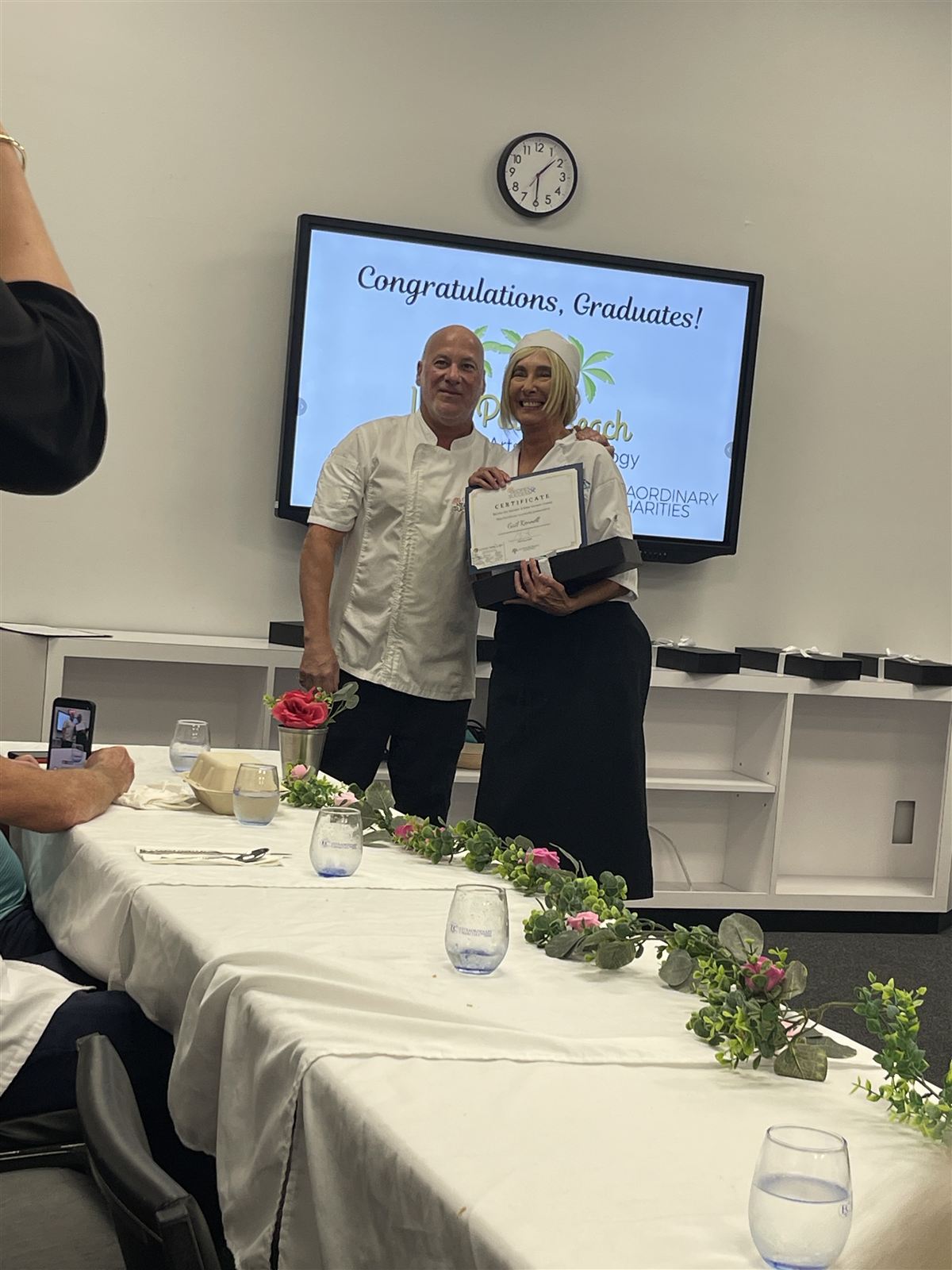
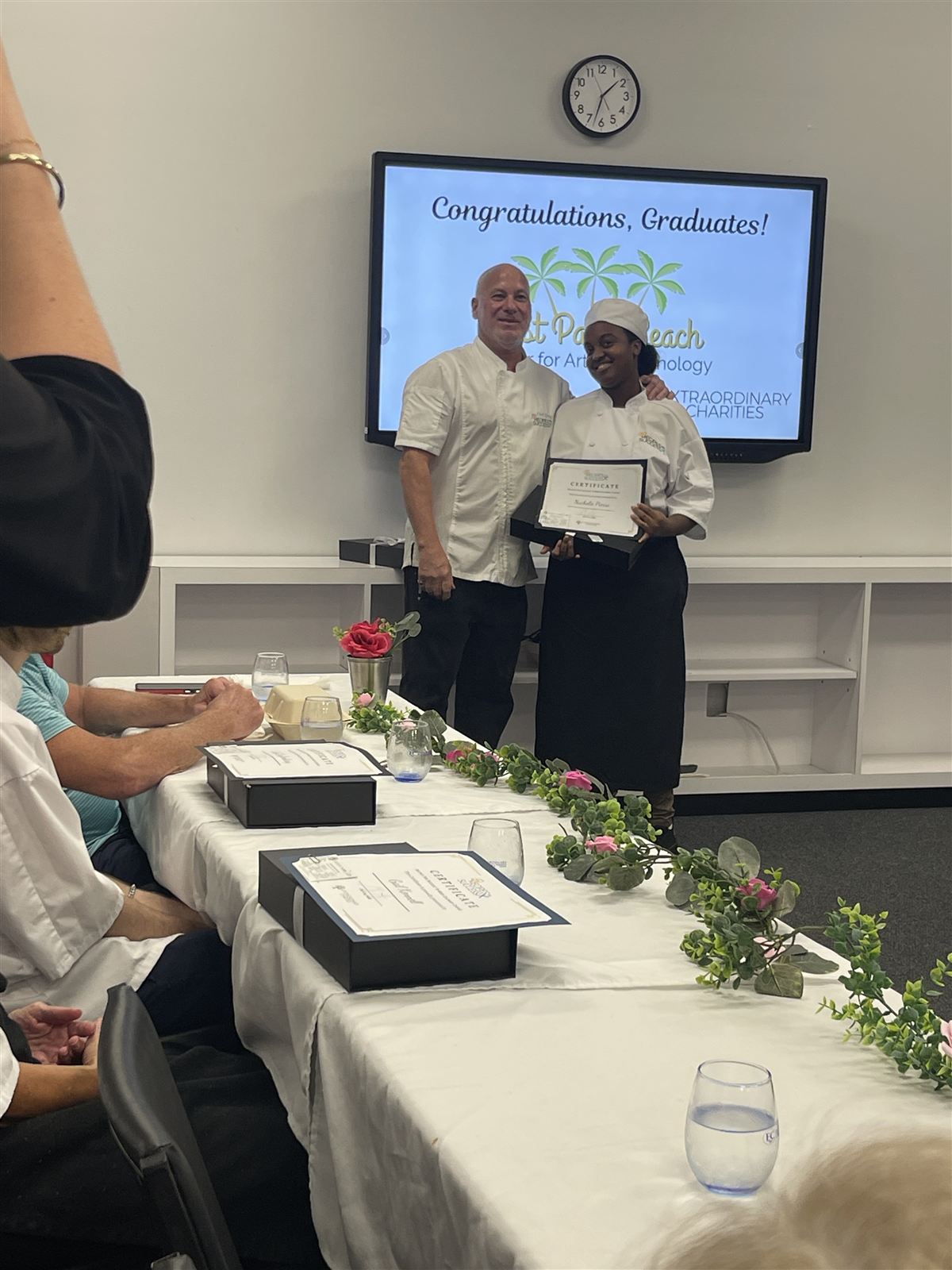
Nachelie Pierre. Marlon Lindor. Shiobhan Terrell. Maame Yaa Mensah. Gail Kennell. Perry Arthur. Jack Laufenberg. Juvens Pierre-Louis.
Eight names, eight stories, and eight people who showed up week after week to learn a trade that asks a lot of anyone: long hours on your feet, precision under pressure, and the discipline to get the fundamentals right before the fun parts even start.
They did it anyway. Over the course of the program, this cohort worked through knife skills, food safety and sanitation, cooking techniques, baking and pastry basics, and the kind of professional habits that separate a hobby cook from someone ready to run a line. By graduation day, they had earned more than a certificate. They had earned a seat at the table in one of Palm Beach County's most in-demand industries.
From Culinary Training to Real Kitchen Careers
WPBCAT's Culinary Arts program is built around one idea: training only matters if it leads somewhere. The eight-week program runs three days a week and mirrors what a real kitchen actually demands, from ServSafe Food Handler certification and knife fundamentals to cooking methods, nutrition and menu planning, food cost management, and professional plating and presentation.
Students also work with industry mentors throughout the program and receive job-placement support as they finish, which is where WPBCAT's role and Recipes for Success's role come together. It's the difference between learning to cook and being ready to work.
The program is free for qualifying participants, and it's designed to open doors into roles like line cook, prep cook, pastry assistant, food service worker, catering assistant, and kitchen manager. Anyone curious about what a typical week looks like can find the full details on the WPBCAT Culinary Arts program page.
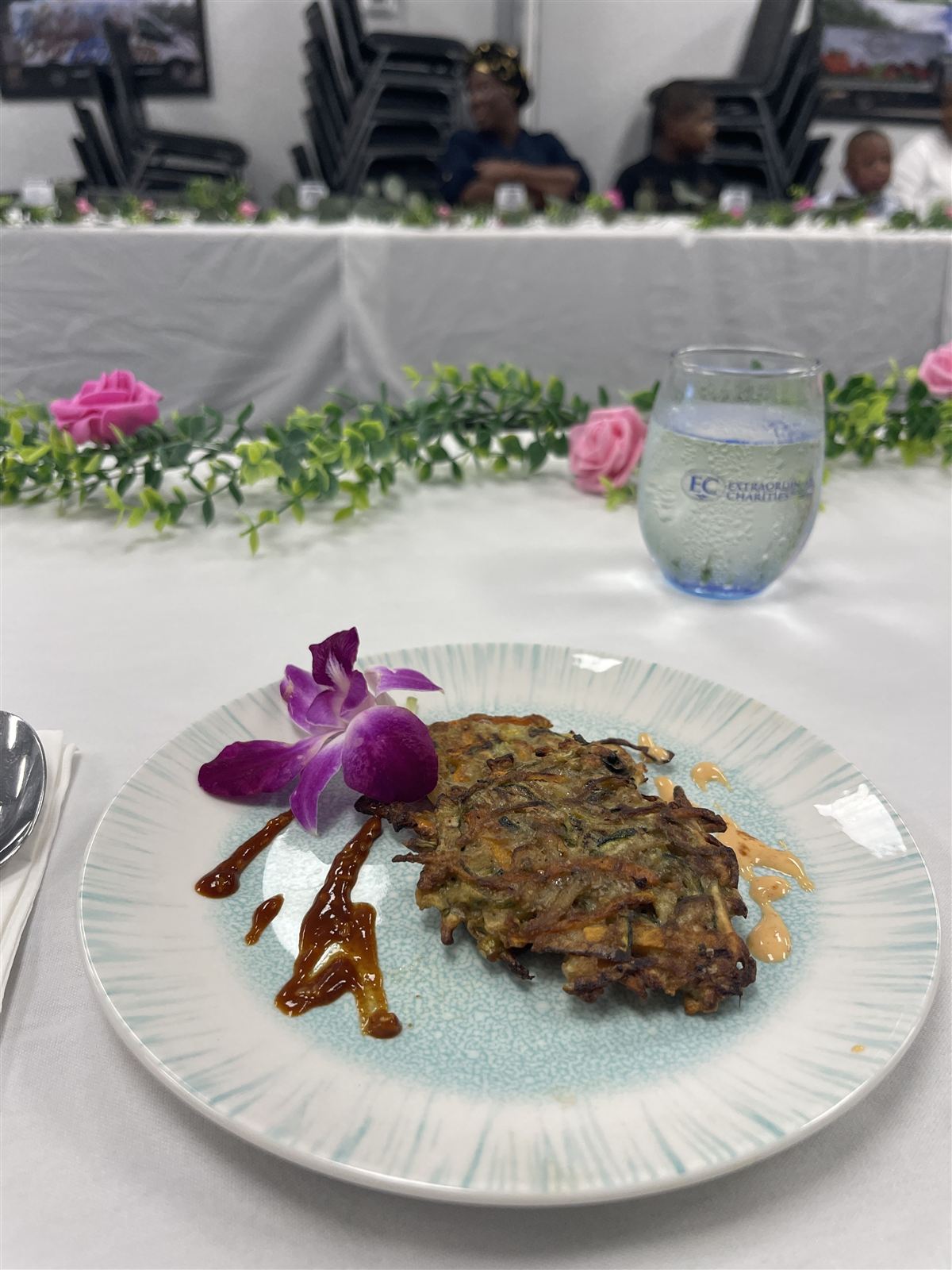
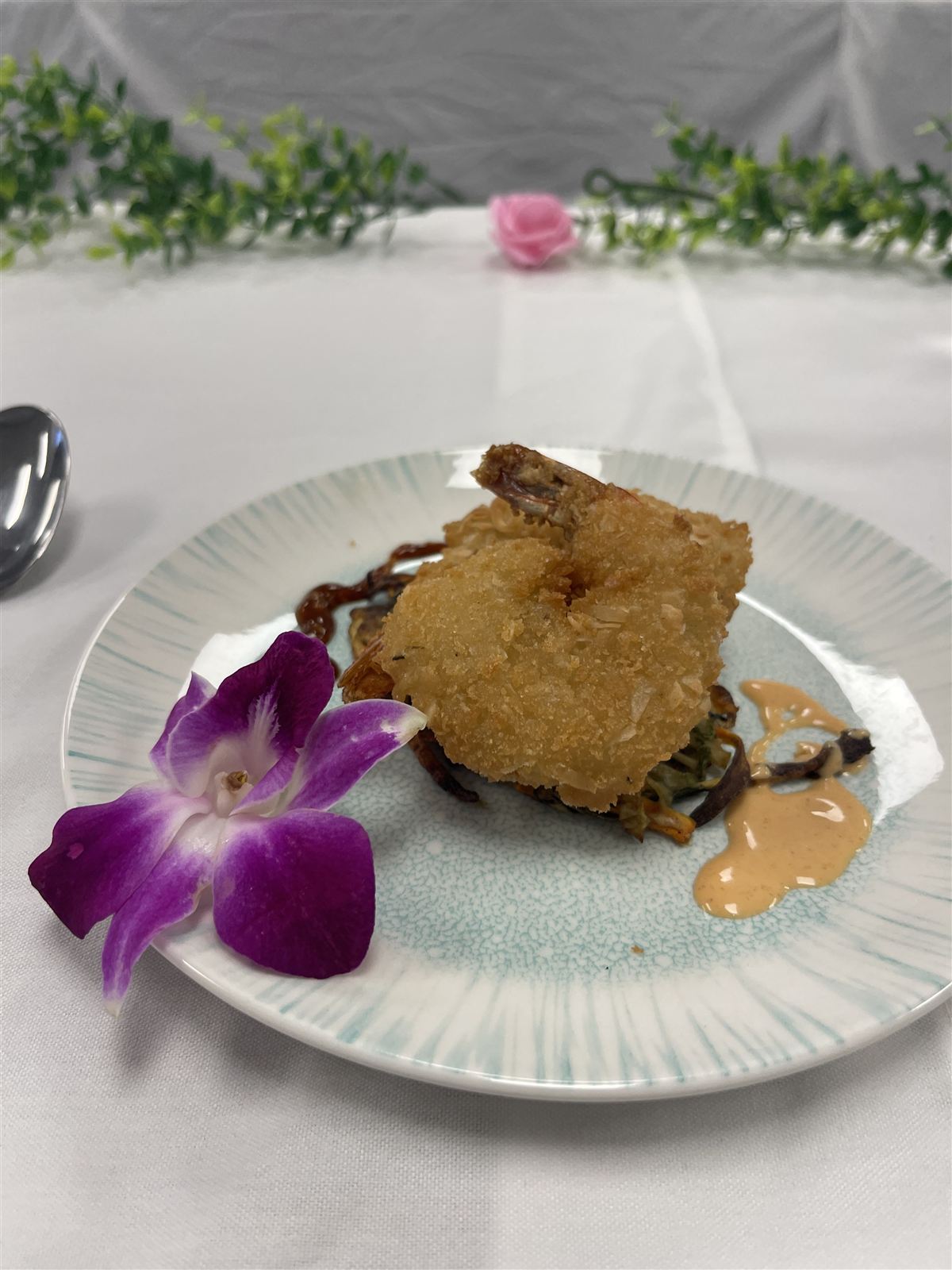
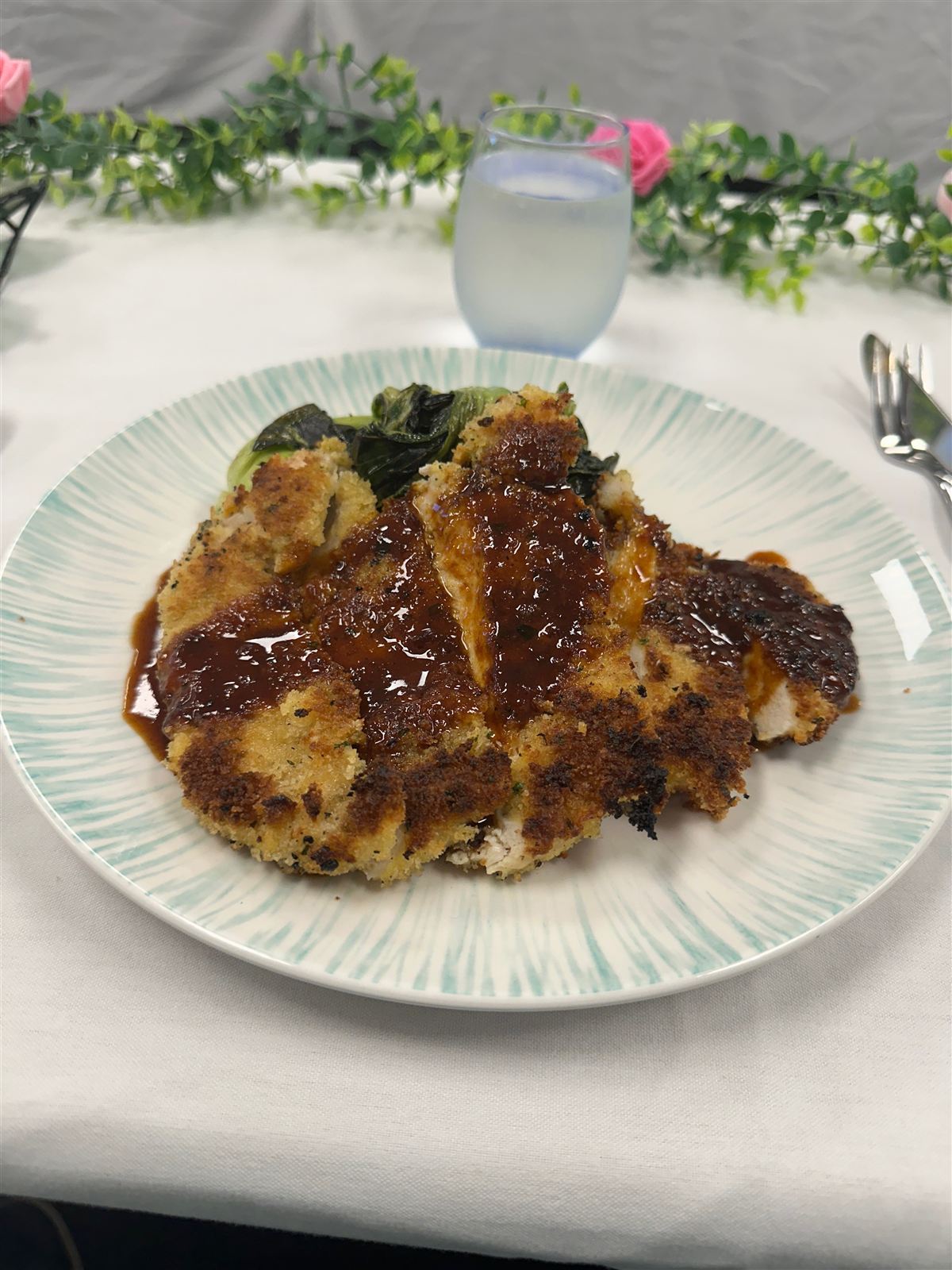
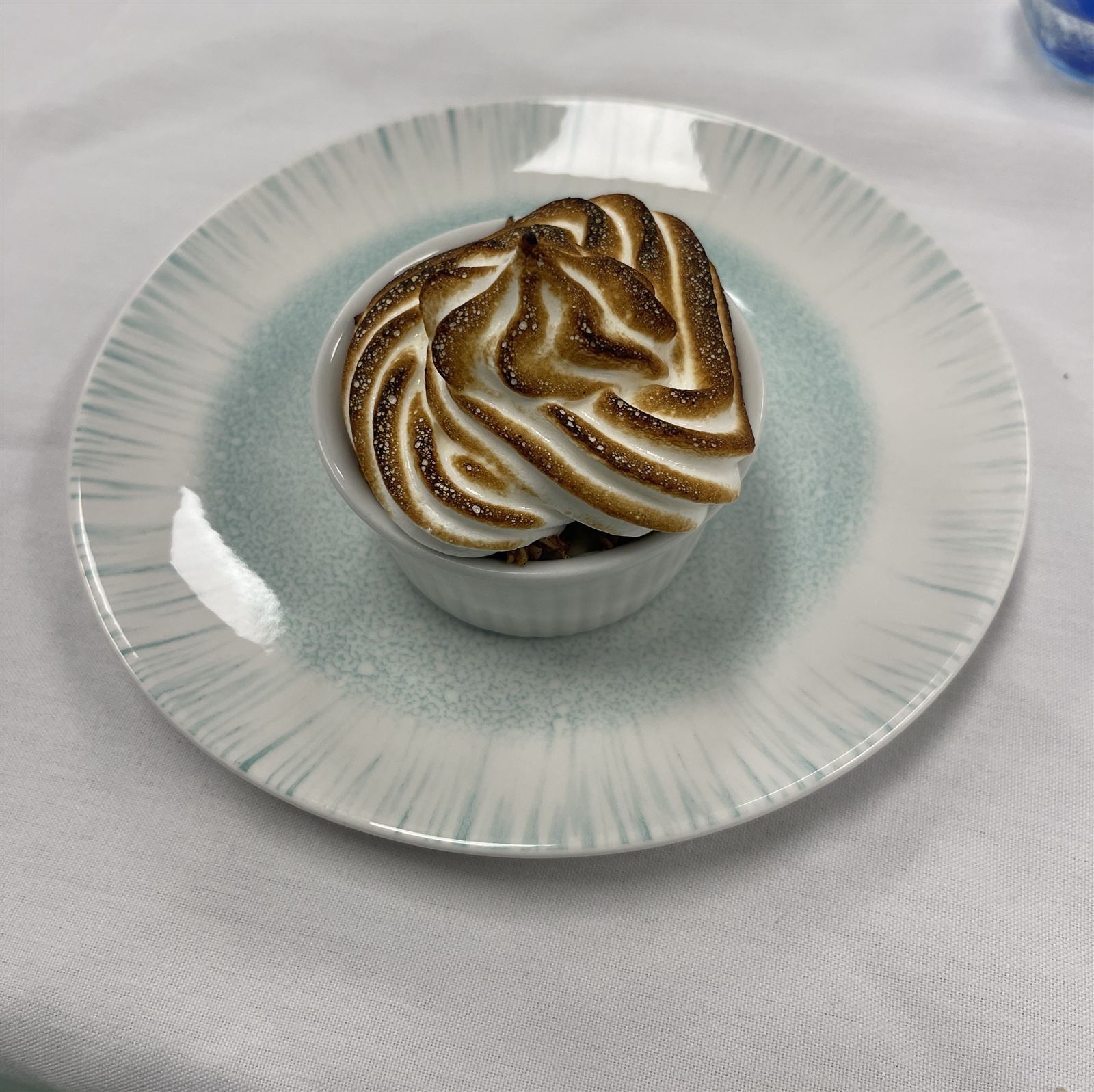
Dishes prepared by the Culinary Workforce Development cohort, plated for their graduation celebration.
Three Graduates Receive On-the-Spot Offers From MorseLife
The clearest proof that this program works showed up before the ceremony even ended.
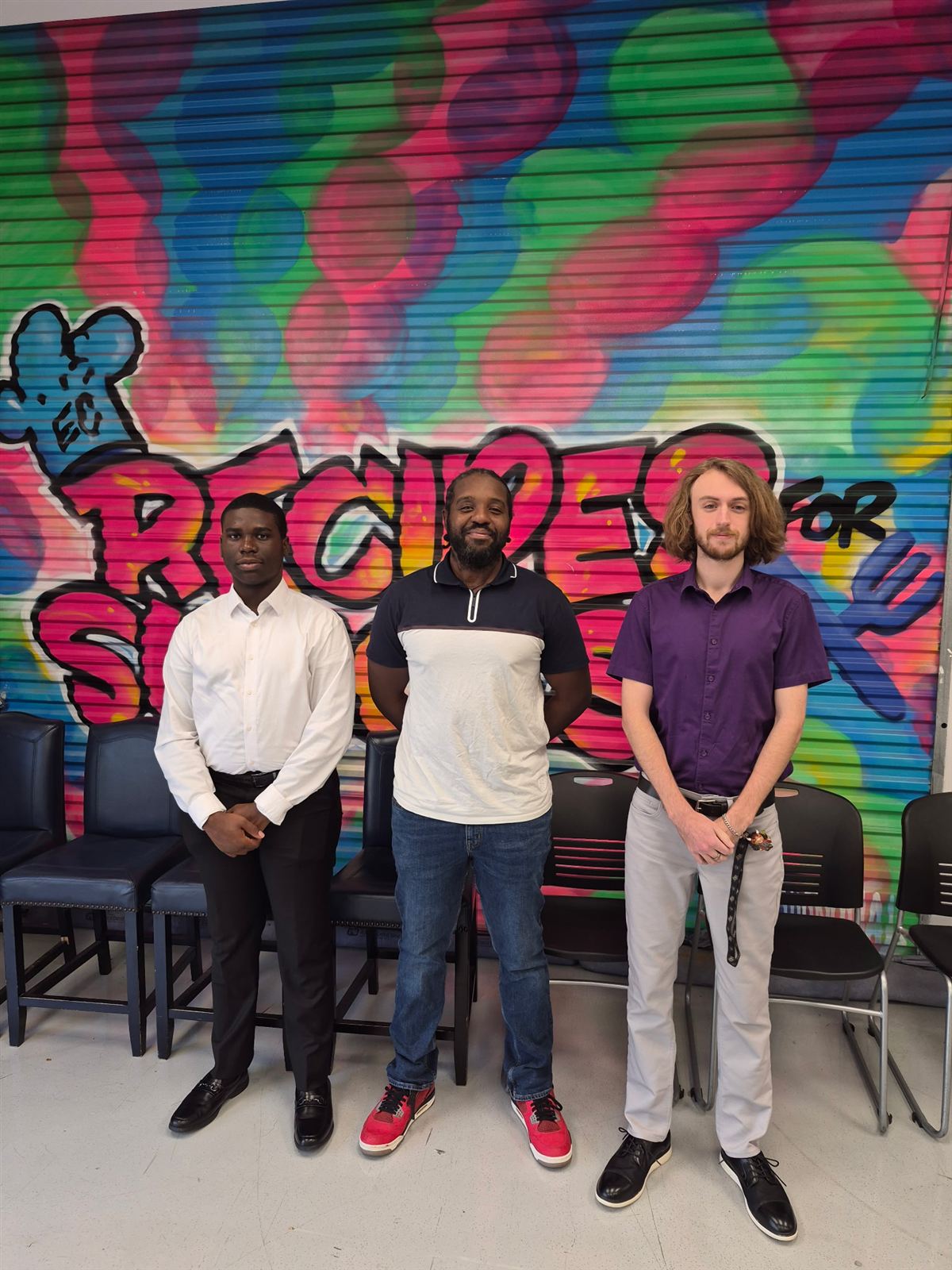
Jack Laufenberg, Juvens Pierre-Louis, and Perry Arthur connected with MorseLife for employment opportunities, and all three were offered positions on the spot. Two of them accepted and were preparing to start work within about a week of graduation. The third had a scheduling conflict with school and wasn't able to accept, which is its own kind of good problem to have.
What makes this especially meaningful is who they'll be learning from next. The chefs they'll work under at MorseLife have held their positions for years and are genuinely invested in continuing to train and mentor the graduates who join their kitchens. That's the full arc workforce development is supposed to deliver: training leads to opportunity, opportunity leads to employment, and employment leads to ongoing mentorship and a real career, not just a first job.
A Partnership Powering Culinary Careers in West Palm Beach
None of this happens without the relationship between WPBCAT and Extraordinary Charities. WPBCAT builds the workforce development pathway, provides job-placement support, and connects graduates to employers. Recipes for Success, an initiative of Extraordinary Charities, delivers the hands-on culinary instruction and real-world kitchen experience that makes graduates job-ready on day one.
Christine Raymond, Executive Director of Extraordinary Charities, has described the partnership as a way for participants to build confidence, pursue meaningful careers, and gain greater independence through their work in the kitchen.
Claudia Kirk-Barto, Executive Director of WPBCAT, has echoed that same idea from the workforce development side: the goal was never just a certificate on graduation day. It's a real opportunity afterward, and WPBCAT is proud of these eight graduates as they take that next step.
Building Palm Beach County's Culinary Workforce
Eight graduates might seem like a small number against the size of Palm Beach County's food service and hospitality industry, but that's exactly the point. Local restaurants, catering companies, hotels, and institutional kitchens, including healthcare and senior living dining programs like MorseLife's, are all looking for trained, dependable staff. Every cohort that comes through WPBCAT's Culinary Arts program adds skilled workers to that pipeline, one graduate at a time.
That's what workforce development looks like on the ground in West Palm Beach: not an abstract economic statistic, but eight people who can now walk into a professional kitchen and know exactly what to do.